
December 2, 2025
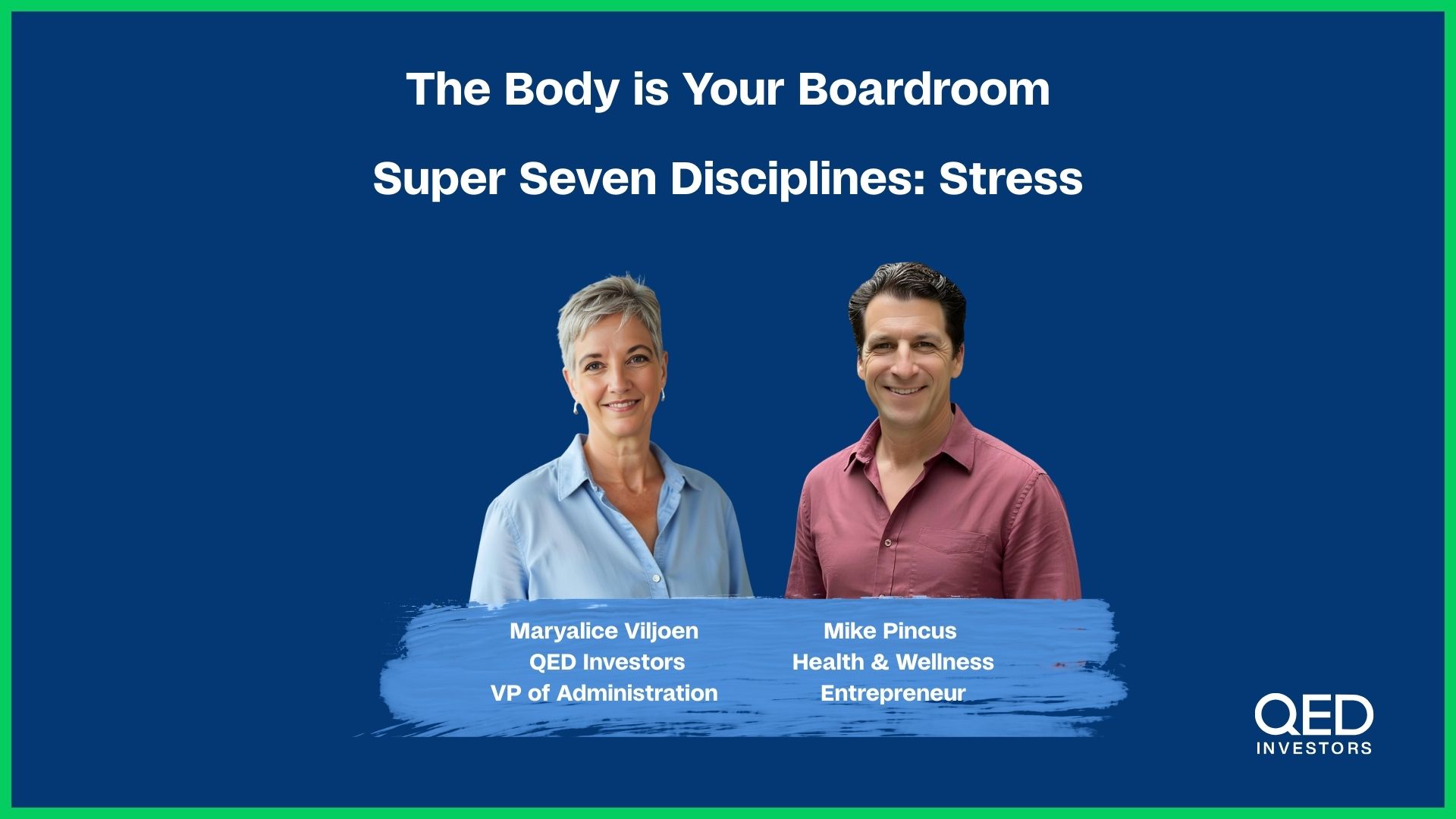
The body is your boardroom: stress is your body's risk management system - what CEOs can learn from elite athletes
Co-written by Mike Pincus
Here's a fun fact: it only takes eight minutes talking to a friend to change your mood. Eight minutes.
Now consider this: every founder knows you need risk to grow a company, but unmanaged risk kills the company. The same is true for stress and your body. Some stress makes you stronger. Too much, without proper management, breaks you down.
So why do we obsess over risk management in our businesses—building frameworks, tracking metrics, creating backup plans for our backup plans—but have zero system for managing stress in our own bodies?
In our latest episode of Body is Your Boardroom, performance coach Mike Pincus breaks down how elite athletes harness stress as a competitive advantage, and what founders and CEOs can steal from their playbook.
Stress Isn't Good or Bad—It's Risk Management
When a CEO walks into a tough board meeting or faces a major business decision, their body responds the same way an athlete's does before a big competition. Cortisol spikes. Heart rate elevates. Muscles tense.
The difference? Athletes are trained to use that response. They don't see stress as something to avoid—they see it as fuel.
As Mike puts it: "Stress is neither bad nor good—it's risk management. In exercise, stress builds muscles. In business, stress can create diamonds. It's all about the friction and how we use it. Does the friction control us, or do we control it?"
The answer comes down to preparation. Both athletes and CEOs can use stress to their advantage, but only when they're prepared. Preparation alleviates stress. When you're prepared, you can manage risk.
Good Stress vs. Bad Stress: Finding Your Sweet Spot
Sports psychologists talk about something called the Yerkes-Dodson Law, often visualized as an inverted U-curve. Here's what it tells us:
- Too little stress = low motivation, boredom, poor performance
- Optimal stress = heightened focus, motivation, peak performance (the "zone")
- Too much stress = anxiety, choking, catastrophic performance drop
Elite athletes don't try to eliminate stress. They calibrate it. They train to find and maintain their optimal arousal zone—that sweet spot where stress sharpens rather than shatters performance.
The difference isn't in the stress itself—it's in how you perceive it. If you see a challenge as threatening, performance drops. If you see it as an opportunity, performance improves.
Stress Is Like the Wind
Mike offers a powerful metaphor: "Stress is like the wind—you can't see it, only the effects of it. You can see the tree move, but you can't see the wind moving the tree. If the wind blows hard enough, the tree will eventually snap."
So how do you know when the wind is about to knock you over? Watch for these warning signs:
- Trouble sleeping or not wanting to wake up
- Avoiding the outdoors or physical activity
- Withdrawing from others
- Changes in appetite—eating too little or too much
- Irritability and snapping at loved ones
- Small things setting you off
Athletes call this overtraining syndrome. Executives call it burnout. The symptoms are identical, and so is the fix: structured recovery, not pushing through.
What Athletes Know About Mental Preparation
Athletes don't just train their bodies—they train their minds. Olympic gold medalist Mikaela Shiffrin famously visualized every possible circumstance so many times that her "first" Olympics was actually her "thousandth" mentally.
What should CEOs steal from this playbook?
Visualization and mental imagery. Before a high-stakes meeting, mentally rehearse how you want it to go. Use all five senses.
Pre-performance routines. Eliminate decisions in advance so 100% of your focus can be on performing.
Reframing pressure. Change your perspective on what's happening. Is this a threat or an opportunity?
Stress inoculation. Elite coaches deliberately create intense, stressful practices so athletes aren't surprised by pressure in competition. Regular exercise does the same for executives—it teaches you how to manage your body's stress response.
And here's something many leaders overlook: when the body feels good, the mind follows. Athletes use foam rollers, massage, and recovery tools regularly. Stop looking at massage as a luxury—it's a necessity.
The Practical Toolkit: What to Do When Stress Builds
Feeling the pressure mounting? Here's Mike's immediate playbook:
- Go for a walk in nature. A simple reset for your nervous system.
- Limit caffeine. It's a stimulant that can give you false alertness.
- Limit alcohol. It never makes anything better long-term.
- Reconnect with something you love. A hobby you've neglected, a puzzle, a book, your favorite movie.
- Call a friend. Remember—8 minutes of conversation can alter your mood.
- Cook for someone. The act of serving others gives us what we need sometimes.
- Move your body. Light exercise boosts endorphins.
You Can't Peak Year-Round
Athletes understand something many CEOs resist: periodization. They deliberately cycle between high-stress training and recovery periods. They know you can't peak year-round—the body needs strategic rest to avoid the exhaustion phase.
Many founders operate at constant high intensity with no planned recovery cycles. They push straight into exhaustion without recognizing the stages the body goes through: Alarm → Resistance → Exhaustion.
The goal is to stay in the resistance (adaptation) stage—where stress makes you stronger—without tipping into exhaustion. And remember, non-training stressors like poor sleep, relationship strain, and bad nutrition compound the stress on your system.
Athletes view stress as information, like leading indicators in risk management. They don't power through blindly—they read the signals and adjust.
The Bottom Line
Stress is neither good nor bad. It's how you manage it that matters.
Athletes don't avoid stress—they calibrate it. They prepare so thoroughly that stress becomes fuel, not friction. They build recovery into their training, not as an afterthought but as a requirement. They practice stress management before they need it.
You wouldn't run a company without managing risk. Don't run your body that way either.
Five Actions You Can Take This Week
- Find your optimal stress zone. Choose a form of exercise you enjoy and use it to learn your body's limits. Notice when your heart rate elevates—that's where you learn to control the stress response instead of letting it control you.
- Build a pre-performance routine. Before your next high-stakes meeting, eliminate as many decisions as possible in advance. What will you wear? What will you eat? What three things do you need to accomplish?
- Install circuit breakers. When stress builds, take an immediate 5-minute walk outside. Not a phone call. Not a working walk. Just reset.
- Schedule recovery like you schedule meetings. Post-fundraise? Block recovery time. After a major launch? Build in a lighter week. You can't peak year-round.
- Track your leading indicators. Are you sleeping poorly? Snapping at people? Avoiding things you used to enjoy? These are your dashboard metrics. Monitor them before the crisis hits.
Remember: Unmanaged stress will destroy your performance just as surely as unmanaged risk destroys companies. The difference between founders who sustain success and those who flame out isn't talent—it's whether they treat their body's risk management system with the same rigor they apply to their business.
This post is part of the Body is Your Boardroom series, where we explore the seven disciplines elite athletes use to perform at their peak—and how founders and CEOs can apply the same principles to leadership. Next up: Nutrition as your body's supply chain.
Co-written by Mike Pincus
Here's a fun fact: it only takes eight minutes talking to a friend to change your mood. Eight minutes.
Now consider this: every founder knows you need risk to grow a company, but unmanaged risk kills the company. The same is true for stress and your body. Some stress makes you stronger. Too much, without proper management, breaks you down.
So why do we obsess over risk management in our businesses—building frameworks, tracking metrics, creating backup plans for our backup plans—but have zero system for managing stress in our own bodies?
In our latest episode of Body is Your Boardroom, performance coach Mike Pincus breaks down how elite athletes harness stress as a competitive advantage, and what founders and CEOs can steal from their playbook.
Stress Isn't Good or Bad—It's Risk Management
When a CEO walks into a tough board meeting or faces a major business decision, their body responds the same way an athlete's does before a big competition. Cortisol spikes. Heart rate elevates. Muscles tense.
The difference? Athletes are trained to use that response. They don't see stress as something to avoid—they see it as fuel.
As Mike puts it: "Stress is neither bad nor good—it's risk management. In exercise, stress builds muscles. In business, stress can create diamonds. It's all about the friction and how we use it. Does the friction control us, or do we control it?"
The answer comes down to preparation. Both athletes and CEOs can use stress to their advantage, but only when they're prepared. Preparation alleviates stress. When you're prepared, you can manage risk.
Good Stress vs. Bad Stress: Finding Your Sweet Spot
Sports psychologists talk about something called the Yerkes-Dodson Law, often visualized as an inverted U-curve. Here's what it tells us:
- Too little stress = low motivation, boredom, poor performance
- Optimal stress = heightened focus, motivation, peak performance (the "zone")
- Too much stress = anxiety, choking, catastrophic performance drop
Elite athletes don't try to eliminate stress. They calibrate it. They train to find and maintain their optimal arousal zone—that sweet spot where stress sharpens rather than shatters performance.
The difference isn't in the stress itself—it's in how you perceive it. If you see a challenge as threatening, performance drops. If you see it as an opportunity, performance improves.
Stress Is Like the Wind
Mike offers a powerful metaphor: "Stress is like the wind—you can't see it, only the effects of it. You can see the tree move, but you can't see the wind moving the tree. If the wind blows hard enough, the tree will eventually snap."
So how do you know when the wind is about to knock you over? Watch for these warning signs:
- Trouble sleeping or not wanting to wake up
- Avoiding the outdoors or physical activity
- Withdrawing from others
- Changes in appetite—eating too little or too much
- Irritability and snapping at loved ones
- Small things setting you off
Athletes call this overtraining syndrome. Executives call it burnout. The symptoms are identical, and so is the fix: structured recovery, not pushing through.
What Athletes Know About Mental Preparation
Athletes don't just train their bodies—they train their minds. Olympic gold medalist Mikaela Shiffrin famously visualized every possible circumstance so many times that her "first" Olympics was actually her "thousandth" mentally.
What should CEOs steal from this playbook?
Visualization and mental imagery. Before a high-stakes meeting, mentally rehearse how you want it to go. Use all five senses.
Pre-performance routines. Eliminate decisions in advance so 100% of your focus can be on performing.
Reframing pressure. Change your perspective on what's happening. Is this a threat or an opportunity?
Stress inoculation. Elite coaches deliberately create intense, stressful practices so athletes aren't surprised by pressure in competition. Regular exercise does the same for executives—it teaches you how to manage your body's stress response.
And here's something many leaders overlook: when the body feels good, the mind follows. Athletes use foam rollers, massage, and recovery tools regularly. Stop looking at massage as a luxury—it's a necessity.
The Practical Toolkit: What to Do When Stress Builds
Feeling the pressure mounting? Here's Mike's immediate playbook:
- Go for a walk in nature. A simple reset for your nervous system.
- Limit caffeine. It's a stimulant that can give you false alertness.
- Limit alcohol. It never makes anything better long-term.
- Reconnect with something you love. A hobby you've neglected, a puzzle, a book, your favorite movie.
- Call a friend. Remember—8 minutes of conversation can alter your mood.
- Cook for someone. The act of serving others gives us what we need sometimes.
- Move your body. Light exercise boosts endorphins.
You Can't Peak Year-Round
Athletes understand something many CEOs resist: periodization. They deliberately cycle between high-stress training and recovery periods. They know you can't peak year-round—the body needs strategic rest to avoid the exhaustion phase.
Many founders operate at constant high intensity with no planned recovery cycles. They push straight into exhaustion without recognizing the stages the body goes through: Alarm → Resistance → Exhaustion.
The goal is to stay in the resistance (adaptation) stage—where stress makes you stronger—without tipping into exhaustion. And remember, non-training stressors like poor sleep, relationship strain, and bad nutrition compound the stress on your system.
Athletes view stress as information, like leading indicators in risk management. They don't power through blindly—they read the signals and adjust.
The Bottom Line
Stress is neither good nor bad. It's how you manage it that matters.
Athletes don't avoid stress—they calibrate it. They prepare so thoroughly that stress becomes fuel, not friction. They build recovery into their training, not as an afterthought but as a requirement. They practice stress management before they need it.
You wouldn't run a company without managing risk. Don't run your body that way either.
Five Actions You Can Take This Week
- Find your optimal stress zone. Choose a form of exercise you enjoy and use it to learn your body's limits. Notice when your heart rate elevates—that's where you learn to control the stress response instead of letting it control you.
- Build a pre-performance routine. Before your next high-stakes meeting, eliminate as many decisions as possible in advance. What will you wear? What will you eat? What three things do you need to accomplish?
- Install circuit breakers. When stress builds, take an immediate 5-minute walk outside. Not a phone call. Not a working walk. Just reset.
- Schedule recovery like you schedule meetings. Post-fundraise? Block recovery time. After a major launch? Build in a lighter week. You can't peak year-round.
- Track your leading indicators. Are you sleeping poorly? Snapping at people? Avoiding things you used to enjoy? These are your dashboard metrics. Monitor them before the crisis hits.
Remember: Unmanaged stress will destroy your performance just as surely as unmanaged risk destroys companies. The difference between founders who sustain success and those who flame out isn't talent—it's whether they treat their body's risk management system with the same rigor they apply to their business.
This post is part of the Body is Your Boardroom series, where we explore the seven disciplines elite athletes use to perform at their peak—and how founders and CEOs can apply the same principles to leadership. Next up: Nutrition as your body's supply chain.