
February 3, 2026
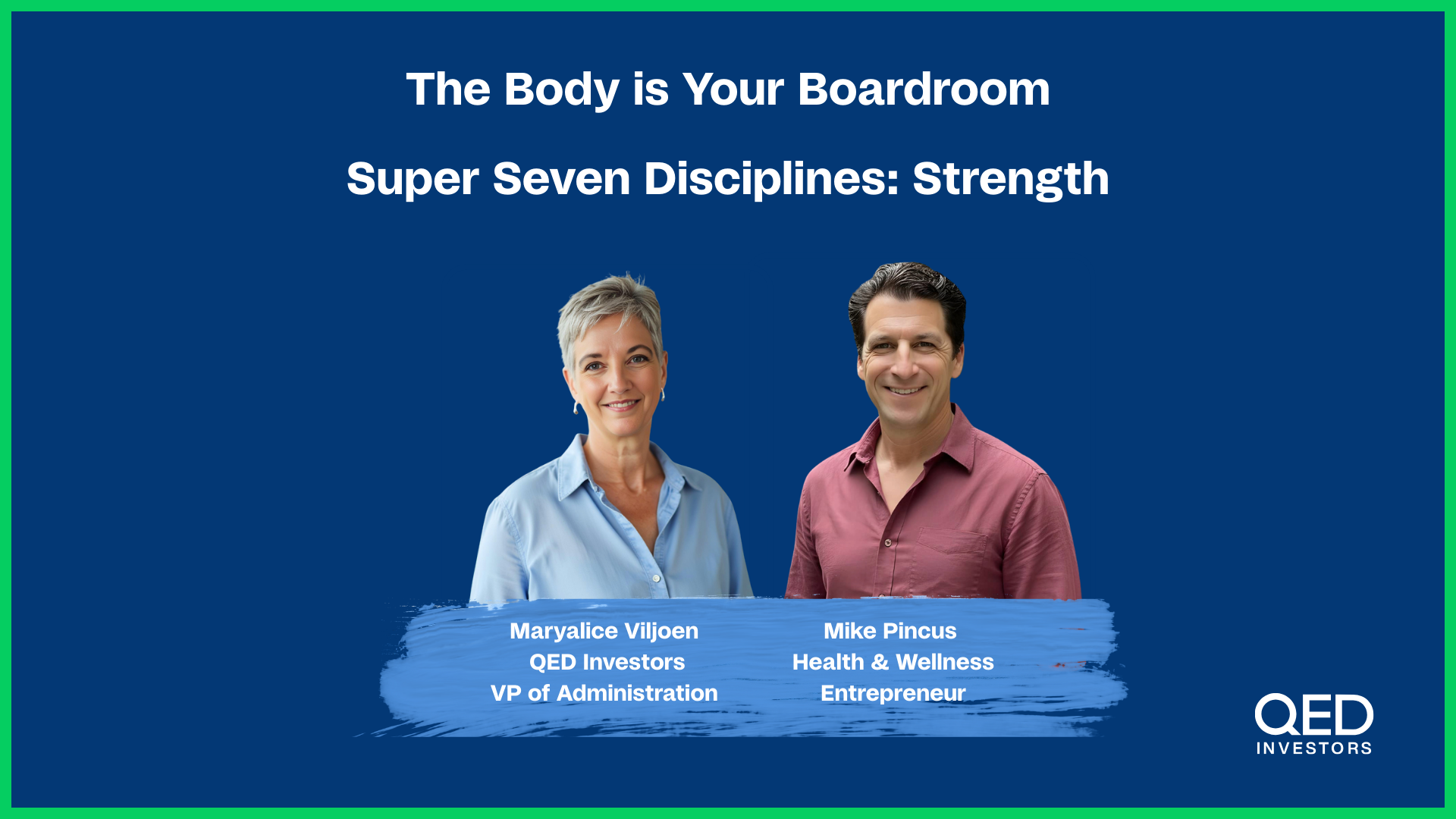
The Body is Your Boardroom: Strength = Operations: Building the Foundation Everything Else Depends On
Co-written by Mike Pincus
Here's a number that should get your attention: after age 30, you lose about 1% of your muscle mass every year if you do nothing about it.
That might not sound dramatic. But run the math. Over a decade, that's 10% of your strength—gone. Over two decades? You've lost a fifth of your physical foundation, right when you need it most to lead at the highest levels.
This is the sixth installment of Body is Your Boardroom, where we explore what founders and executives can learn from elite athletes about sustaining peak performance. We've been working through seven disciplines that make up your body's operating system, each one mapping to how you'd run a high-performing company.
Today's discipline is strength. And in our framework, strength is your body's operations function.
Why Operations? Why Strength?
Think about what operations does in a company. It's not the flashiest function—it doesn't get the press that product launches or big deals do. But without solid operations, nothing else works. Strategy becomes theory. Finance becomes fiction. Your people can't execute.
Strength works the same way in your body. It's the foundation that makes everything else possible. Your mobility depends on muscles strong enough to stabilize your joints. Your cardiovascular system needs muscular support to function efficiently. Your stress resilience, your energy levels, your ability to show up with presence in a room—all of it traces back to this foundational capacity.
You wouldn't try to run a company without solid operations. So why run your body that way?
The High-ROI Case for Strength Training
If you spend most of your day in an office or boardroom, strength training might be one of the highest-return investments you can make in yourself. Here's why.
It counteracts the physical cost of your job. Long hours in a chair weaken key postural muscles—your glutes, core, and upper back—while tightening others like hip flexors and chest. This creates imbalances that show up as back pain, neck tension, and hip discomfort. Strength training reverses these patterns. It's not about vanity; it's about not being in pain.
It sharpens your mind. Stronger muscles improve blood flow, which directly supports brain performance. Research shows strength training improves focus, memory, and decision-making—exactly what you want sharp in high-stakes meetings. That afternoon crash you're fighting through? Often metabolic, not mental. Resistance training improves energy production at the cellular level, giving you more stable energy throughout the workday.
It builds stress resilience. We've talked throughout this series about stress as a discipline to manage, not avoid. Strength training regulates cortisol and boosts neurotransmitters like dopamine and serotonin. The translation: you handle pressure better, recover faster from tense conversations, and stay calmer when stakes are high. When your body knows it can handle physical stress, your mind becomes more resilient to mental stress.
It protects your career longevity. That 1% annual decline isn't just about today's performance—it affects everything from metabolic health to disease risk. Maintaining muscle mass reduces your chances of diabetes, heart disease, and osteoporosis. It increases bone density. These are the conditions that pull many leaders out of peak performance years too early. You're not just training for this quarter; you're training for the next two decades of leadership.
The Presence Factor
There's something else that happens when you feel strong, something harder to quantify but immediately recognizable in any room.
A stronger body changes how you stand, walk, speak, and lead. Better posture and physical competence translate to confidence—not the performative kind, but the quiet, grounded kind that makes people want to follow you. You move with purpose. You take up space differently. You project capability without saying a word.
This isn't about looking a certain way. It's about executive presence, the way you show up as a leader. When you feel physically capable, your breathing is fuller, your posture is natural, your energy is authentic. People feel connected to that. They respect it. That's not superficial—that's foundational to how leadership actually works.
What Actually Counts
So what qualifies as strength training? Anything that resists the body in motion. That could be bodyweight exercises, resistance bands, free weights, or machines. You don't need a fancy gym or complicated equipment. You need resistance and intention.
The practical starting point is simpler than you might think: two days a week. Six movements. Two rounds of 15 repetitions each. That's it—maybe 20-30 minutes total.
The key is choosing movements that train your body the way it actually moves in real life. Push, pull, squat, hinge, carry, rotate. Movements that cross multiple planes—forward, sideways, rotational. Some that change direction and elevation. Some on one leg, some on two. You're building functional strength that translates to everything from picking up luggage to standing through a long presentation, not isolating muscles like a bodybuilder.
As you progress, you add rounds—up to five. You vary repetitions between 8 and 20, keeping the body adapting. You adjust weight so your last three reps are challenging but your form stays clean. Form is everything. Poor form leads to injury, and injury takes you out of the game completely.
The Connection to Everything Else
Here's what makes strength particularly powerful in this framework: it amplifies every other discipline.
Strength training improves sleep quality—you sleep deeper when your body has actually worked. It regulates the stress hormones we talked about in our risk management episode. It requires the proper nutrition and hydration we've covered to recover and build muscle. And it directly supports mobility—strong muscles protect your joints and allow you to move with greater range and confidence.
Without operations, your strategy can't execute, your finance can't deliver, your HR can't support the work. Without strength, the other six disciplines can't fully deliver either. It's the foundation that makes the integrated system work.
The Bottom Line
You're going to lose 1% of your muscle mass every year after 30 if you do nothing. That's not a scare tactic—it's biology. The question is whether you're going to let that happen passively or actively build the foundation that supports everything else.
Start with two days a week. Six movements. Two rounds. Build consistency before you build complexity. Train your body to handle stress, and your mind will thank you.
A stronger body makes for a stronger leader. And leadership, after all, is a performance sport.
Body is Your Boardroom is a series featuring Mavi Viljoen of QED Investors and performance coach Mike Pincus, exploring what founders and executives can learn from elite athletes about sustaining peak performance. Seven disciplines. One body. Your boardroom.
Co-written by Mike Pincus
Here's a number that should get your attention: after age 30, you lose about 1% of your muscle mass every year if you do nothing about it.
That might not sound dramatic. But run the math. Over a decade, that's 10% of your strength—gone. Over two decades? You've lost a fifth of your physical foundation, right when you need it most to lead at the highest levels.
This is the sixth installment of Body is Your Boardroom, where we explore what founders and executives can learn from elite athletes about sustaining peak performance. We've been working through seven disciplines that make up your body's operating system, each one mapping to how you'd run a high-performing company.
Today's discipline is strength. And in our framework, strength is your body's operations function.
Why Operations? Why Strength?
Think about what operations does in a company. It's not the flashiest function—it doesn't get the press that product launches or big deals do. But without solid operations, nothing else works. Strategy becomes theory. Finance becomes fiction. Your people can't execute.
Strength works the same way in your body. It's the foundation that makes everything else possible. Your mobility depends on muscles strong enough to stabilize your joints. Your cardiovascular system needs muscular support to function efficiently. Your stress resilience, your energy levels, your ability to show up with presence in a room—all of it traces back to this foundational capacity.
You wouldn't try to run a company without solid operations. So why run your body that way?
The High-ROI Case for Strength Training
If you spend most of your day in an office or boardroom, strength training might be one of the highest-return investments you can make in yourself. Here's why.
It counteracts the physical cost of your job. Long hours in a chair weaken key postural muscles—your glutes, core, and upper back—while tightening others like hip flexors and chest. This creates imbalances that show up as back pain, neck tension, and hip discomfort. Strength training reverses these patterns. It's not about vanity; it's about not being in pain.
It sharpens your mind. Stronger muscles improve blood flow, which directly supports brain performance. Research shows strength training improves focus, memory, and decision-making—exactly what you want sharp in high-stakes meetings. That afternoon crash you're fighting through? Often metabolic, not mental. Resistance training improves energy production at the cellular level, giving you more stable energy throughout the workday.
It builds stress resilience. We've talked throughout this series about stress as a discipline to manage, not avoid. Strength training regulates cortisol and boosts neurotransmitters like dopamine and serotonin. The translation: you handle pressure better, recover faster from tense conversations, and stay calmer when stakes are high. When your body knows it can handle physical stress, your mind becomes more resilient to mental stress.
It protects your career longevity. That 1% annual decline isn't just about today's performance—it affects everything from metabolic health to disease risk. Maintaining muscle mass reduces your chances of diabetes, heart disease, and osteoporosis. It increases bone density. These are the conditions that pull many leaders out of peak performance years too early. You're not just training for this quarter; you're training for the next two decades of leadership.
The Presence Factor
There's something else that happens when you feel strong, something harder to quantify but immediately recognizable in any room.
A stronger body changes how you stand, walk, speak, and lead. Better posture and physical competence translate to confidence—not the performative kind, but the quiet, grounded kind that makes people want to follow you. You move with purpose. You take up space differently. You project capability without saying a word.
This isn't about looking a certain way. It's about executive presence, the way you show up as a leader. When you feel physically capable, your breathing is fuller, your posture is natural, your energy is authentic. People feel connected to that. They respect it. That's not superficial—that's foundational to how leadership actually works.
What Actually Counts
So what qualifies as strength training? Anything that resists the body in motion. That could be bodyweight exercises, resistance bands, free weights, or machines. You don't need a fancy gym or complicated equipment. You need resistance and intention.
The practical starting point is simpler than you might think: two days a week. Six movements. Two rounds of 15 repetitions each. That's it—maybe 20-30 minutes total.
The key is choosing movements that train your body the way it actually moves in real life. Push, pull, squat, hinge, carry, rotate. Movements that cross multiple planes—forward, sideways, rotational. Some that change direction and elevation. Some on one leg, some on two. You're building functional strength that translates to everything from picking up luggage to standing through a long presentation, not isolating muscles like a bodybuilder.
As you progress, you add rounds—up to five. You vary repetitions between 8 and 20, keeping the body adapting. You adjust weight so your last three reps are challenging but your form stays clean. Form is everything. Poor form leads to injury, and injury takes you out of the game completely.
The Connection to Everything Else
Here's what makes strength particularly powerful in this framework: it amplifies every other discipline.
Strength training improves sleep quality—you sleep deeper when your body has actually worked. It regulates the stress hormones we talked about in our risk management episode. It requires the proper nutrition and hydration we've covered to recover and build muscle. And it directly supports mobility—strong muscles protect your joints and allow you to move with greater range and confidence.
Without operations, your strategy can't execute, your finance can't deliver, your HR can't support the work. Without strength, the other six disciplines can't fully deliver either. It's the foundation that makes the integrated system work.
The Bottom Line
You're going to lose 1% of your muscle mass every year after 30 if you do nothing. That's not a scare tactic—it's biology. The question is whether you're going to let that happen passively or actively build the foundation that supports everything else.
Start with two days a week. Six movements. Two rounds. Build consistency before you build complexity. Train your body to handle stress, and your mind will thank you.
A stronger body makes for a stronger leader. And leadership, after all, is a performance sport.
Body is Your Boardroom is a series featuring Mavi Viljoen of QED Investors and performance coach Mike Pincus, exploring what founders and executives can learn from elite athletes about sustaining peak performance. Seven disciplines. One body. Your boardroom.