
January 20, 2026
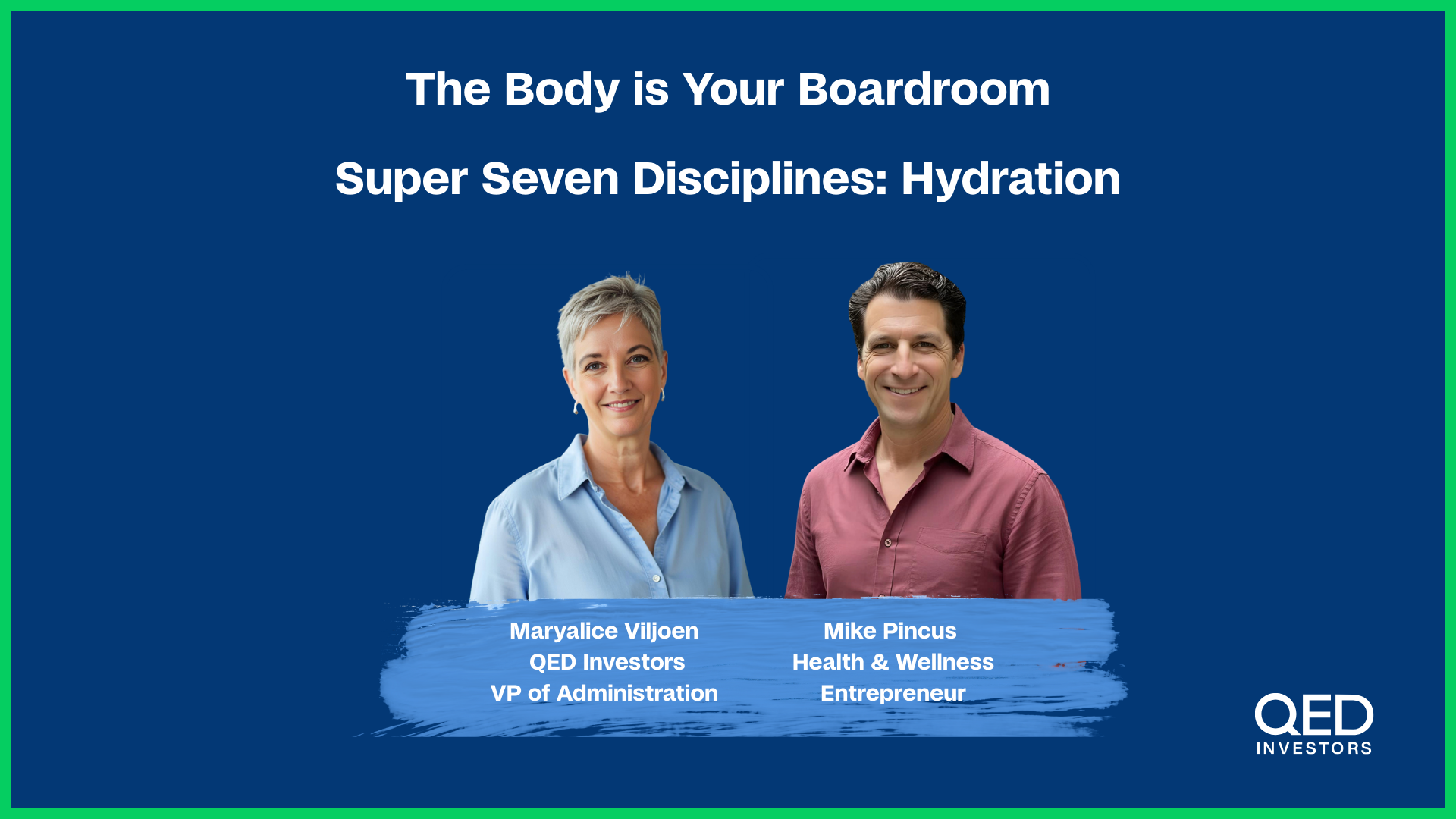
The Body is Your Boardroom: hydration is your body's HR department: the performance booster CEOs overlook
Co-written by Mike Pincus
Here's a fun fact that should make every leader pause: by the time you feel thirsty, you're already dehydrated. Thirst is a lagging indicator, not a leading one. And if you're making decisions while dehydrated, studies show your cognitive function can drop by up to 25%.
Twenty-five percent.
Think about that. You could be leaving a quarter of your mental capacity on the table—not because you need more sleep, not because you're stressed, but simply because you didn't drink enough water.
In our latest episode of The Body is Your Boardroom, performance coach Mike Pincus breaks down why hydration is your body's human resources department—and why it might be the simplest performance booster you're ignoring.
Hydration Is Payroll, Benefits, and Development for Your Cells
When we think about HR in a company, we're talking about the function that delivers resources, protects people, and enables them to perform at their best. Payroll makes sure people get paid so they show up. Benefits keep them healthy and protected. Coaching and development help them grow and thrive.
Hydration does exactly the same thing for your body.
Your body is roughly 60% water. Your brain? About 75%. Every system depends on it:
- Payroll function: Water transports nutrients to your organs, delivers oxygen to your cells, and removes waste. Without it, your cells can't do their jobs—just like employees can't show up if payroll doesn't run.
- Benefits function: Water protects your joints and tissues, cushions your organs, and regulates your temperature. It's the infrastructure keeping your systems healthy and protected.
- Coaching and development function: Water enables mental clarity, focus, and cognitive function. When you're properly hydrated, your brain can learn, adapt, and perform at its best.
As Mike puts it: "It's like finding out payroll didn't run until employees start complaining. You want to catch it before there's a problem."
The 3pm Slump Might Not Be What You Think
That sluggish feeling in the afternoon meeting? The inability to focus on a complex problem? The headache that won't quit?
Before you reach for another coffee or blame stress, ask yourself: when did I last drink water?
Many symptoms we attribute to other causes are actually signs of mild dehydration:
- Headaches
- Fatigue and brain fog
- Muscle and joint discomfort
- Dry mouth
- Constipation
- Dark yellow or strong-smelling urine
Even mild dehydration—as little as 1-2%—can impair concentration, short-term memory, and decision-making ability. For a CEO making high-stakes calls all day, being slightly dehydrated is like trying to run your company with your best people operating at 75% capacity.
You're leaving performance on the table.
How Much Water Do You Actually Need?
The old "eight glasses a day" rule is overly simplistic. Current guidelines take a more individualized approach:
General daily hydration (including beverages and food):
- Men: ~3.7 liters (around 125 ounces)
- Women: ~2.7 liters (around 91 ounces)
About 20% of your hydration comes from food—fruits, vegetables, soups. The rest comes from fluids.
You need more when:
- Exercising (especially in heat)
- Sweating heavily
- Flying (airplane cabins are extremely dehydrating)
- At altitude
- In hot or arid climates
- Drinking alcohol
A good rule during exercise: add about 8 ounces every 20-30 minutes of activity, more if you're sweating significantly.
The Coffee Question: Does It Count?
Here's good news for coffee lovers: this is a big update from what we used to believe.
Caffeine isn't dehydrating the way we once thought. Coffee and tea do count toward your daily fluid intake, especially for regular caffeine drinkers.
That said, water is still the best choice, and you shouldn't rely solely on coffee for hydration.
Alcohol, however, is a different story. It's a diuretic, meaning it causes your body to lose more water than you're taking in. If you're at a networking event or business dinner with drinks, have a glass of water between alcoholic beverages, and definitely hydrate well before and after.
Watch the Leading Indicators, Not Just Thirst
For leaders used to watching dashboards and metrics, here are the leading indicators of dehydration to monitor:
Physical signals:
- Headaches at predictable times
- Energy crashes (especially mid-afternoon)
- Dark yellow or strong-smelling urine (caveat: riboflavin/Vitamin B2 in multivitamins can make urine bright yellow even when hydrated)
- Dry mouth
- Muscle and joint discomfort
Performance signals:
- Difficulty focusing on complex problems
- Mental fog
- Short-term memory lapses
- Hitting a wall at the same time every day
Athletes constantly monitor how they feel. CEOs should do the same.
And remember—by the time you feel thirsty, you're already behind.
Everything Is Connected
Hydration doesn't exist in a vacuum. It's foundational to every other discipline we've covered in this series:
- If you're dehydrated, your sleep quality suffers.
- If you're dehydrated, your stress response is amplified.
- If you're dehydrated, your body can't properly process and utilize the nutrients from food.
You can eat perfectly and still underperform if you're not hydrated. It's like having great employees but no HR infrastructure to support them—the talent is there, but they can't perform at their best.
What to Drink (And When You Need More Than Water)
Best choices:
- Water
- Sparkling water
- Electrolyte powders or tablets (low/no sugar)
- Herbal teas
- Infused water (lemon, lime, berries, cucumber)
Use with awareness:
- Sports drinks: helpful only if you're sweating for 60+ minutes
- Juices: nutrient-rich but often high in sugar
- Sodas: high sugar, unnecessary calories
About electrolytes: Sodium, potassium, and magnesium help your body retain and use water properly. If you're just sitting at a desk, plain water is usually fine. But if you're exercising intensely, sweating a lot, traveling, or recovering from illness, electrolytes can help. Look for low or no-sugar options—you don't need sugary sports drinks unless you're doing prolonged, intense activity.
The Practical Playbook for Busy Leaders
Hydration doesn't need to be complicated. Small, consistent actions make a big difference:
Make water visible. Keep a refillable bottle on your desk, in your bag, in every meeting. What gets seen gets done.
Start your day right. Drink a full glass of water before your coffee. Open your "HR department" before the workday begins.
Add flavor if needed. Infused water with citrus or cucumber can make consistent intake easier if plain water feels boring.
Set reminders. If you tend to forget, use your phone or calendar to prompt you.
Adjust for conditions. Flying today? Add extra water. Big presentation? Hydrate beforehand. Business dinner with drinks? Match each alcoholic beverage with water.
Track your patterns. Notice when you get headaches or energy dips. Are they hydration-related?
The Bottom Line
Hydration is probably the simplest performance booster available to you—and yet many leaders overlook it.
Think about what happens when HR stops running payroll or lets benefits lapse. Everything falls apart. Your body works the same way.
Don't let your hydration fall behind and expect your brain and body to perform. Start your day with water, keep a bottle visible, and don't wait until you're thirsty.
It's one of the easiest wins you can give yourself.
Five Actions You Can Take This Week
- Start before you're thirsty. Thirst is a lagging indicator. Begin each morning with a full glass of water before your coffee. Think of it as running payroll before anyone has to ask where their check is.
- Make water visible. Keep a refillable bottle on your desk, in your bag, and in every meeting. Athletes don't wait until they're depleted to hydrate—they build it into their routine.
- Track the leading indicators. Pay attention to headaches, energy dips, brain fog, and urine color (accounting for vitamins). These are your dashboard metrics. Don't wait for thirst to tell you there's a problem.
- Adjust for your environment. Flying? Add extra water. Big presentation? Hydrate beforehand. Drinking alcohol at a business dinner? Match each drink with a glass of water.
- Upgrade your fluids strategically. Water is your foundation, but consider adding electrolytes (low/no sugar) on heavy travel days or after intense workouts. Coffee counts toward hydration, but don't let it be your only source.
Remember: You wouldn't expect your team to show up and perform without payroll, benefits, and development support. Your body works the same way—hydration delivers resources to your cells, protects your organs, and enables every system to perform at its best. The difference between leaders who maintain clarity and energy all day and those who hit walls isn't always sleep or nutrition. Sometimes it's as simple as drinking enough water.
This post is part of the Body is Your Boardroom series, where we explore the seven disciplines elite athletes use to perform at their peak—and how founders and CEOs can apply the same principles to leadership. Next up: Mobility as your body's strategy function.
Co-written by Mike Pincus
Here's a fun fact that should make every leader pause: by the time you feel thirsty, you're already dehydrated. Thirst is a lagging indicator, not a leading one. And if you're making decisions while dehydrated, studies show your cognitive function can drop by up to 25%.
Twenty-five percent.
Think about that. You could be leaving a quarter of your mental capacity on the table—not because you need more sleep, not because you're stressed, but simply because you didn't drink enough water.
In our latest episode of The Body is Your Boardroom, performance coach Mike Pincus breaks down why hydration is your body's human resources department—and why it might be the simplest performance booster you're ignoring.
Hydration Is Payroll, Benefits, and Development for Your Cells
When we think about HR in a company, we're talking about the function that delivers resources, protects people, and enables them to perform at their best. Payroll makes sure people get paid so they show up. Benefits keep them healthy and protected. Coaching and development help them grow and thrive.
Hydration does exactly the same thing for your body.
Your body is roughly 60% water. Your brain? About 75%. Every system depends on it:
- Payroll function: Water transports nutrients to your organs, delivers oxygen to your cells, and removes waste. Without it, your cells can't do their jobs—just like employees can't show up if payroll doesn't run.
- Benefits function: Water protects your joints and tissues, cushions your organs, and regulates your temperature. It's the infrastructure keeping your systems healthy and protected.
- Coaching and development function: Water enables mental clarity, focus, and cognitive function. When you're properly hydrated, your brain can learn, adapt, and perform at its best.
As Mike puts it: "It's like finding out payroll didn't run until employees start complaining. You want to catch it before there's a problem."
The 3pm Slump Might Not Be What You Think
That sluggish feeling in the afternoon meeting? The inability to focus on a complex problem? The headache that won't quit?
Before you reach for another coffee or blame stress, ask yourself: when did I last drink water?
Many symptoms we attribute to other causes are actually signs of mild dehydration:
- Headaches
- Fatigue and brain fog
- Muscle and joint discomfort
- Dry mouth
- Constipation
- Dark yellow or strong-smelling urine
Even mild dehydration—as little as 1-2%—can impair concentration, short-term memory, and decision-making ability. For a CEO making high-stakes calls all day, being slightly dehydrated is like trying to run your company with your best people operating at 75% capacity.
You're leaving performance on the table.
How Much Water Do You Actually Need?
The old "eight glasses a day" rule is overly simplistic. Current guidelines take a more individualized approach:
General daily hydration (including beverages and food):
- Men: ~3.7 liters (around 125 ounces)
- Women: ~2.7 liters (around 91 ounces)
About 20% of your hydration comes from food—fruits, vegetables, soups. The rest comes from fluids.
You need more when:
- Exercising (especially in heat)
- Sweating heavily
- Flying (airplane cabins are extremely dehydrating)
- At altitude
- In hot or arid climates
- Drinking alcohol
A good rule during exercise: add about 8 ounces every 20-30 minutes of activity, more if you're sweating significantly.
The Coffee Question: Does It Count?
Here's good news for coffee lovers: this is a big update from what we used to believe.
Caffeine isn't dehydrating the way we once thought. Coffee and tea do count toward your daily fluid intake, especially for regular caffeine drinkers.
That said, water is still the best choice, and you shouldn't rely solely on coffee for hydration.
Alcohol, however, is a different story. It's a diuretic, meaning it causes your body to lose more water than you're taking in. If you're at a networking event or business dinner with drinks, have a glass of water between alcoholic beverages, and definitely hydrate well before and after.
Watch the Leading Indicators, Not Just Thirst
For leaders used to watching dashboards and metrics, here are the leading indicators of dehydration to monitor:
Physical signals:
- Headaches at predictable times
- Energy crashes (especially mid-afternoon)
- Dark yellow or strong-smelling urine (caveat: riboflavin/Vitamin B2 in multivitamins can make urine bright yellow even when hydrated)
- Dry mouth
- Muscle and joint discomfort
Performance signals:
- Difficulty focusing on complex problems
- Mental fog
- Short-term memory lapses
- Hitting a wall at the same time every day
Athletes constantly monitor how they feel. CEOs should do the same.
And remember—by the time you feel thirsty, you're already behind.
Everything Is Connected
Hydration doesn't exist in a vacuum. It's foundational to every other discipline we've covered in this series:
- If you're dehydrated, your sleep quality suffers.
- If you're dehydrated, your stress response is amplified.
- If you're dehydrated, your body can't properly process and utilize the nutrients from food.
You can eat perfectly and still underperform if you're not hydrated. It's like having great employees but no HR infrastructure to support them—the talent is there, but they can't perform at their best.
What to Drink (And When You Need More Than Water)
Best choices:
- Water
- Sparkling water
- Electrolyte powders or tablets (low/no sugar)
- Herbal teas
- Infused water (lemon, lime, berries, cucumber)
Use with awareness:
- Sports drinks: helpful only if you're sweating for 60+ minutes
- Juices: nutrient-rich but often high in sugar
- Sodas: high sugar, unnecessary calories
About electrolytes: Sodium, potassium, and magnesium help your body retain and use water properly. If you're just sitting at a desk, plain water is usually fine. But if you're exercising intensely, sweating a lot, traveling, or recovering from illness, electrolytes can help. Look for low or no-sugar options—you don't need sugary sports drinks unless you're doing prolonged, intense activity.
The Practical Playbook for Busy Leaders
Hydration doesn't need to be complicated. Small, consistent actions make a big difference:
Make water visible. Keep a refillable bottle on your desk, in your bag, in every meeting. What gets seen gets done.
Start your day right. Drink a full glass of water before your coffee. Open your "HR department" before the workday begins.
Add flavor if needed. Infused water with citrus or cucumber can make consistent intake easier if plain water feels boring.
Set reminders. If you tend to forget, use your phone or calendar to prompt you.
Adjust for conditions. Flying today? Add extra water. Big presentation? Hydrate beforehand. Business dinner with drinks? Match each alcoholic beverage with water.
Track your patterns. Notice when you get headaches or energy dips. Are they hydration-related?
The Bottom Line
Hydration is probably the simplest performance booster available to you—and yet many leaders overlook it.
Think about what happens when HR stops running payroll or lets benefits lapse. Everything falls apart. Your body works the same way.
Don't let your hydration fall behind and expect your brain and body to perform. Start your day with water, keep a bottle visible, and don't wait until you're thirsty.
It's one of the easiest wins you can give yourself.
Five Actions You Can Take This Week
- Start before you're thirsty. Thirst is a lagging indicator. Begin each morning with a full glass of water before your coffee. Think of it as running payroll before anyone has to ask where their check is.
- Make water visible. Keep a refillable bottle on your desk, in your bag, and in every meeting. Athletes don't wait until they're depleted to hydrate—they build it into their routine.
- Track the leading indicators. Pay attention to headaches, energy dips, brain fog, and urine color (accounting for vitamins). These are your dashboard metrics. Don't wait for thirst to tell you there's a problem.
- Adjust for your environment. Flying? Add extra water. Big presentation? Hydrate beforehand. Drinking alcohol at a business dinner? Match each drink with a glass of water.
- Upgrade your fluids strategically. Water is your foundation, but consider adding electrolytes (low/no sugar) on heavy travel days or after intense workouts. Coffee counts toward hydration, but don't let it be your only source.
Remember: You wouldn't expect your team to show up and perform without payroll, benefits, and development support. Your body works the same way—hydration delivers resources to your cells, protects your organs, and enables every system to perform at its best. The difference between leaders who maintain clarity and energy all day and those who hit walls isn't always sleep or nutrition. Sometimes it's as simple as drinking enough water.
This post is part of the Body is Your Boardroom series, where we explore the seven disciplines elite athletes use to perform at their peak—and how founders and CEOs can apply the same principles to leadership. Next up: Mobility as your body's strategy function.